Oddsconsin Blog

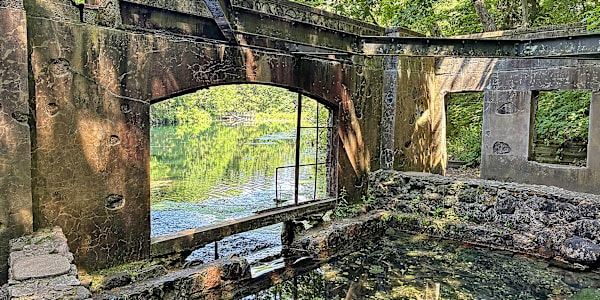
Oddsconsin 58 – Paradise Springs Resort Hotel For me tonight there'll

For me tonight there'll be no sleep until the dawn
Neon sign from paradise hotel across the street
Is blinking on and off and on and off and on
- Eliza Gilkyson, Paradise Hotel

Wisconsin has lost many of its old resort hotels – The Fountain Spring House in Waukesha (opened in 1874, burned down in 1878, rebuilt in 1879, demolished in the 1950s), the Mirabel Caves Hotel in Manitowoc County (built in 1900, burned down in 2013), the Lake Geneva Hotel (designed by Frank Lloyd Wright, built in 1912,...
Oddsconsin 57 – Pigeons A stone monument stands in Wyalusing State Park

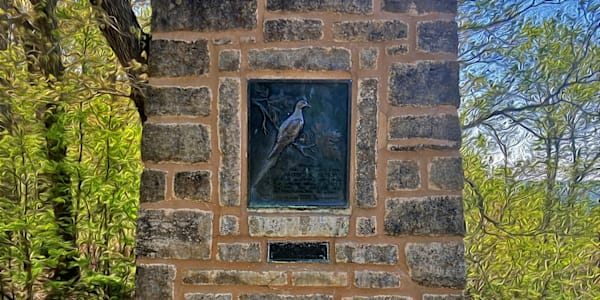
A stone monument stands in Wyalusing State Park (Grant County) overlooking the bluffs of the Mississippi River. It’s a memorial to the passenger pigeon, once abundant throughout the continent, but now extinct.

The monument was erected in 1947 by the Wisconsin Society for Ornithology, which first conceived of the idea in 1941. A brass plaque depicts a passenger pigeon based on a sketch by Owen Gromme, then Curator of Birds at the Milwaukee Public Museum. The bird is perched on the limb of an...

Oddsconsin 56 – Death in the Capitol (Part 2) This is the second part of a

This is the second part of a series on the shooting of Charles Arndt by James Vineyard in the Wisconsin Capitol in Madison. For part one, see Oddsconsin 55.

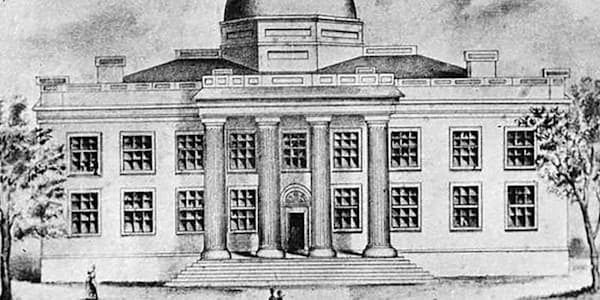
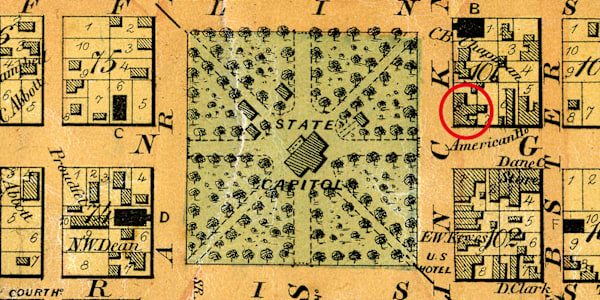
The shooting took place in the third Wisconsin Capitol, the first one built in Madison. The first capitol was established in a small wood-frame building in Belmont (Lafayette County) in 1836, before Wisconsin was a state. Burlington, Iowa, was home to the second capitol (also a small building) from 1837-38. After the building burned down,...

Oddsconsin 55 – Death in the Capitol Wisconsin was one of the first states

Wisconsin was one of the first states to abolish capital punishment. In 1853, the legislature passed a law stipulating that “for the crime of murder in the first degree, the penalty shall be imprisonment in the state prison, during the life of the person so convicted; and the punishment of death, for such offence, is hereby abolished.” [1]

The state prison had been established at Waupun only two years earlier, with the first permanent building completed in 1854. [2] The creation of the state...

Oddsconsin 54 – Disputed Territories (Part 5) This is the final installment

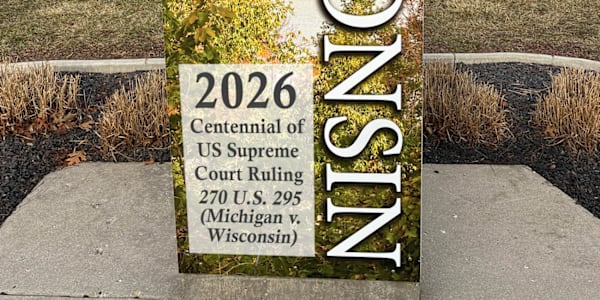
This is the final installment in a series on Wisconsin’s boundaries. The previous posts are Oddsconsin 50 (Illinois boundary), Oddsconsin 51 and Oddsconsin 52 (Minnesota boundary) and Oddsconsin 53 (Michigan boundary, part 1). This post ends the series with a final look at the Michigan boundary.

It seems Michigan was never completely satisfied with the boundary description in Wisconsin’s 1846 Enabling Act and 1848 constitution. Even though the boundary was surveyed and monumented in 1847,...

Oddsconsin 53 – Disputed Territories (Part 4) This is the penultimate

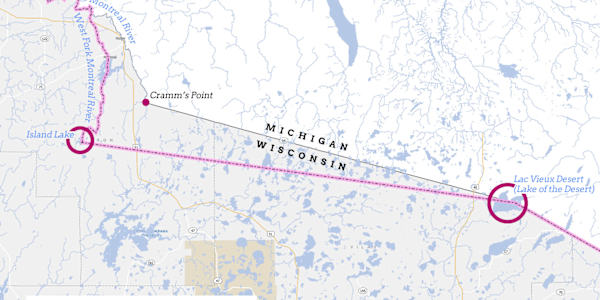
This is the penultimate installment in a series on Wisconsin’s boundaries. Oddsconsin 50 examined the Illinois boundary, while Oddsconsin 51 and Oddsconsin 52 looked at the Minnesota boundary. This post focuses on Wisconsin’s boundary with Michigan, a topic that will conclude next week in Oddsconsin 54.

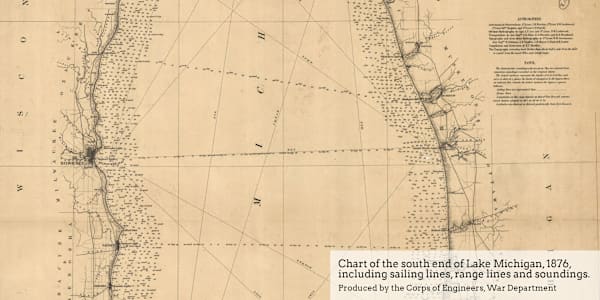
The map that accompanies this post shows the boundary between Wisconsin and Michigan in different shades of gray. This depiction is in agreement with Article II of the Wisconsin Constitution [1...

Oddsconsin 52 – Disputed Territories (Part 3) This is the third post in a

This is the third post in a series on Wisconsin’s state boundaries. Oddsconsin 50 examined the boundary with Illinois, while Oddsconsin 51 began exploring the boundary with Minnesota. This post continues with the Minnesota case.

To understand why the Wisconsin-Minnesota boundary is where it is, we need to go back to the Northwest Ordinance of 1787, which created the Northwest Territory from lands ceded by the eastern states. The Northwest Ordinance stipulated that no more than five states were...

Oddsconsin 51 – Disputed Territories (Part 2) This is the second part in a

This is the second part in a series on Wisconsin’s state boundaries. Last week, Oddsconsin 50 looked at the Wisconsin-Illinois boundary. This week, we focus on the boundary with Minnesota.

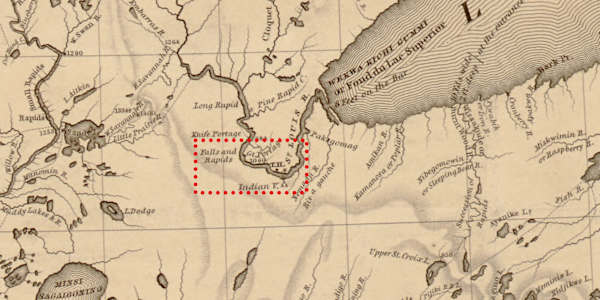
The Wisconsin-Minnesota boundary starts in Lake Superior, travels a few miles up the St. Louis River, turns due south in a straight line to the St. Croix River, follows the St. Croix to the Mississippi River, and then follows the Mississippi to the Illinois boundary. The last leg of the Mississippi River...

Oddsconsin 50 – Disputed Territories Maps do a poor job of conveying the

Maps do a poor job of conveying the complexity of political boundaries. Boundaries are often imprecise, ambiguous or disputed. By portraying such boundaries as precise lines, maps oversimplify political reality and obscure the often contested history of boundary definition and delineation.

Perhaps you’ve never thought much about Wisconsin’s boundaries with Illinois, Iowa, Minnesota and Michigan. If so, it might surprise you to discover that some of these boundaries are in the wrong place,...

Oddsconsin 49 – Sugar! (Part 3) This particular one is a crooked, crooked

This particular one is a crooked, crooked beet
- The Clash, 1980

For part 1 of Sugar! see Oddsconsin 47. For part 2 see Oddsconsin 48.

Following the Spanish-American War of 1898, one of the biggest threats to the emerging US beet sugar industry was the production of cane sugar by the country’s newly acquired territories of Puerto Rico and the Philippines, as well as Cuba, which was briefly a US protectorate. Cane sugar in these areas was cheaper to produce than domestic beet sugar, and thus...

Oddsconsin 48 – Sugar! (Part 2) ‘Cause we got the beetsWe got the beetsWe

‘Cause we got the beets
We got the beets
We got the beets, yeah
- The Go-Go's, 1980

For part 1 of Sugar! see Oddsconsin 47.

In the late 1800s, the largest beet sugar factories in the US were established in states that grew the most beets. In his 1899 book, Herbert Myrick gives some examples: a factory in Bay City, Michigan, with a capacity of 350 tons of beets per day and annual production of 7.5 million pounds of sugar per year; a factory in Oxnard, California, with a warehouse for 10 million...

Oddsconsin 47 – Sugar!  It's all about the beets, 'bout the

It's all about the beets, 'bout the beets...
- Meghan Trainor, 2014

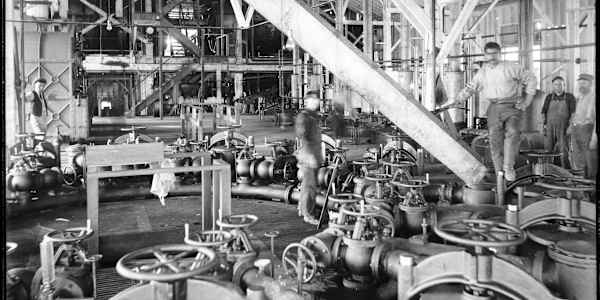
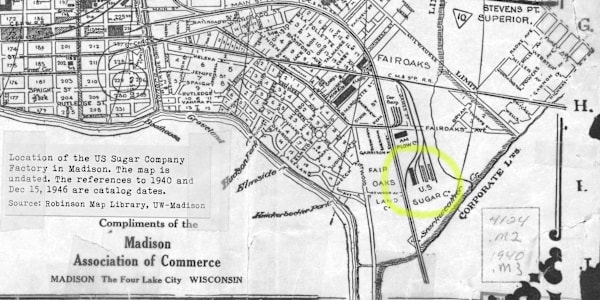
The Garver Feed Mill sits on the east side of Madison, close to the Olbrich Botanical Gardens and adjacent to Starkweather Creek. The renovated mill is a venue for events and home to a variety of commercial establishments. From 1931 to 1975, it operated as the Garver Supply Company and, under different ownership, as the Garver Feed and Supply Company until 1997. [1]

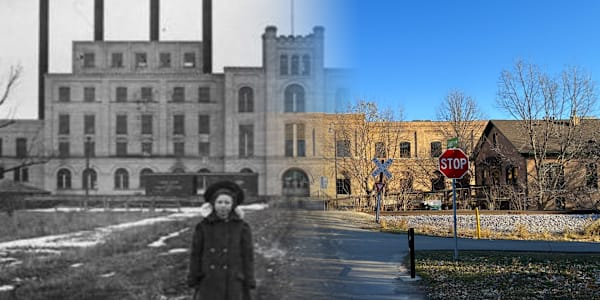
But the building was not constructed as a feed mill. It was...

Oddsconsin 46 – (Even More) Deadly Maritime Disasters There’s a fire in the

There’s a fire in the boiler and she’s gonna blow
We’ve all got a ticket to the midnight show
- Kerry Livgren, Fire in the Boiler, 2022

This is the third and final post on Wisconsin Maritime disasters. [Post 1] [Post 2]

Despite the widespread fame of the Edmund Fitzgerald, Wisconsin’s deadliest maritime disasters didn’t happen on Lake Superior and didn’t involve big freighters carrying iron ore. They occurred on Lake Michigan, close to the Wisconsin shoreline, and involved steam-powered...

Oddsconsin 45 – The SS Edmund Fitzgerald Unless you live in one of the

Unless you live in one of the state’s coastal communities, it can be easy to forget that Wisconsin has strong maritime traditions. It borders two of the Great Lakes, Superior and Michigan, that combined hold almost fifteen percent of the world’s fresh water. Lake Superior is the largest lake on earth by area. It is also very deep – over 1,300 feet – and very cold. [1]

Since the beginning of European settlement of the upper Midwest, Lake Superior has been a commercial shipping lane for iron...

Oddsconsin 44 – Death’s Door Door County evokes images of fall foliage,

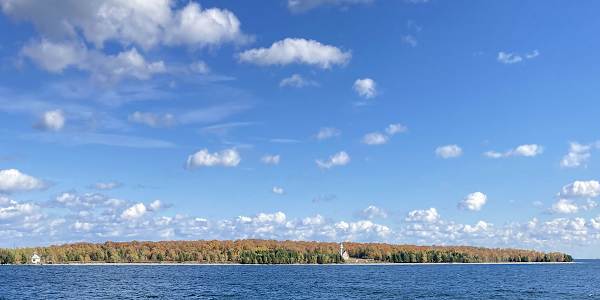
Door County evokes images of fall foliage, quaint villages, cherry orchards, sky-blue waters and sandy beaches. It’s Wisconsin’s playground. The name Door must be short for Doorway to Heaven. Or perhaps it’s from the French d’Or, meaning golden.

Not so fast. The county’s name actually comes from Death’s Door, the treacherous strait connecting Green Bay to Lake Michigan across the northern tip of the Door Peninsula. Countless ships have been wrecked in gales that forced them onto the strait’s...

Oddsconsin 43 – Geographical Markers Wisconsin is geographically unique.

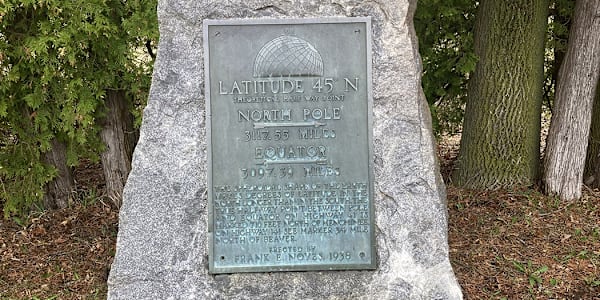
Wisconsin is geographically unique. It’s the only state that contains the point at 45 degrees north latitude, 90 degrees west longitude, marking the center of both the Northern and Western Hemispheres. But where, exactly, is it?

There’s a geographical marker in Marathon County known is the “Poniatowski Marker" that claims to be this point. The marker states that the location is (a) midway between the Equator (the baseline for latitude, at 0 degrees) and the North Pole (at 90 degrees north) and...

Oddsconsin 42 – Farmers and Merchants Union Bank It is the pervading law of

It is the pervading law of all things organic and inorganic…that form ever follows function.
- Louis Sullivan, 1896

In many ways, Columbus (Columbia County) looks like a lot of other small Wisconsin cities. The area of modern commercial and industrial development, with its car dealerships and fast-food establishments, straddles the intersection of Highways 16 and 151. Less than a mile to the east, the historic commercial buildings downtown have been converted to modern uses – restaurants,...

Oddsconsin 41 – Sawyer County B-52 Crash History is not contained in thick

History is not contained in thick books but lives in our very blood.
- Carl Jung

This is the third and final post in a series on fatal airplane accidents in Wisconsin. [Read Part 1 and Part 2.]

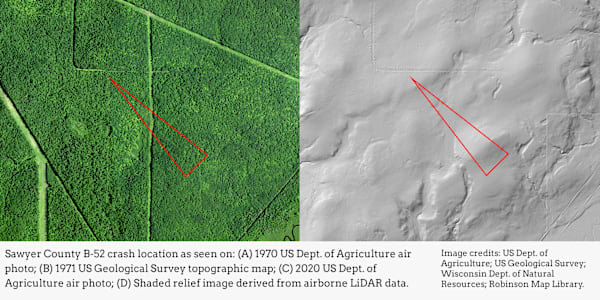
The deadliest military airplane accident in Wisconsin occurred on November 18, 1966, when a B-52 bomber crashed fifteen miles south of Hayward, in Sawyer County, killing all nine crew members.

The bomber was on a ten-hour training mission from Barksdale Air Force Base in Shreveport, Louisiana, and had...

Oddsconsin 40 – Lake Monona Airplane Fatalities (Part 2) “To live without

“To live without risk for me would be tantamount to death.”
- Jacqueline Cochran

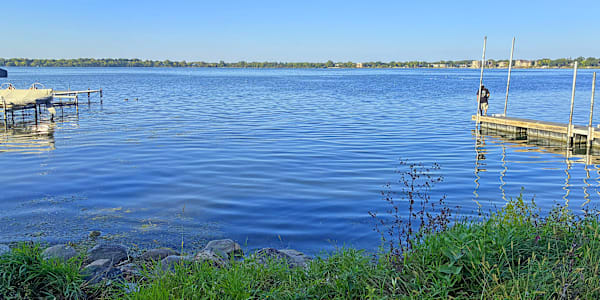
Nearly a decade before Otis Redding (see Oddsconsin 39), Lake Monona was the site of another fatal airplane crash. Although the loss of life was not as great, the story is still a tragic one.

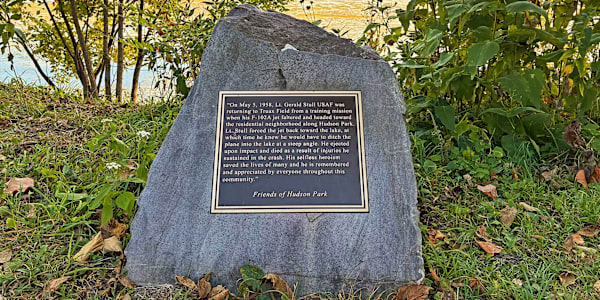
On May 5, 1958, Lt. Gerald Stull was on a routine training flight in an Air Force F-102 Delta Dagger, a single-seat fighter/interceptor. [1] At 1:30 pm, three miles south of the runway at Truax Field in Madison, Stull radioed...

Oddsconsin 39 – Lake Monona Aircraft Fatalities (Part 1) Lake Monona, one

Lake Monona, one of the four lakes in the Madison area, has been the scene of more than one fatal airplane crash. It’s a small lake, only about five square miles in size, but it’s on the flight path for airplanes landing at Madison’s airport, now called Dane County Regional Airport, but once known as Madison Municipal Airport.

The most famous of these crashes took the lives of Otis Redding – a Soul artist from Macon, Georgia – and most of his band members. The accident occurred on December 10,...